
Moving Up
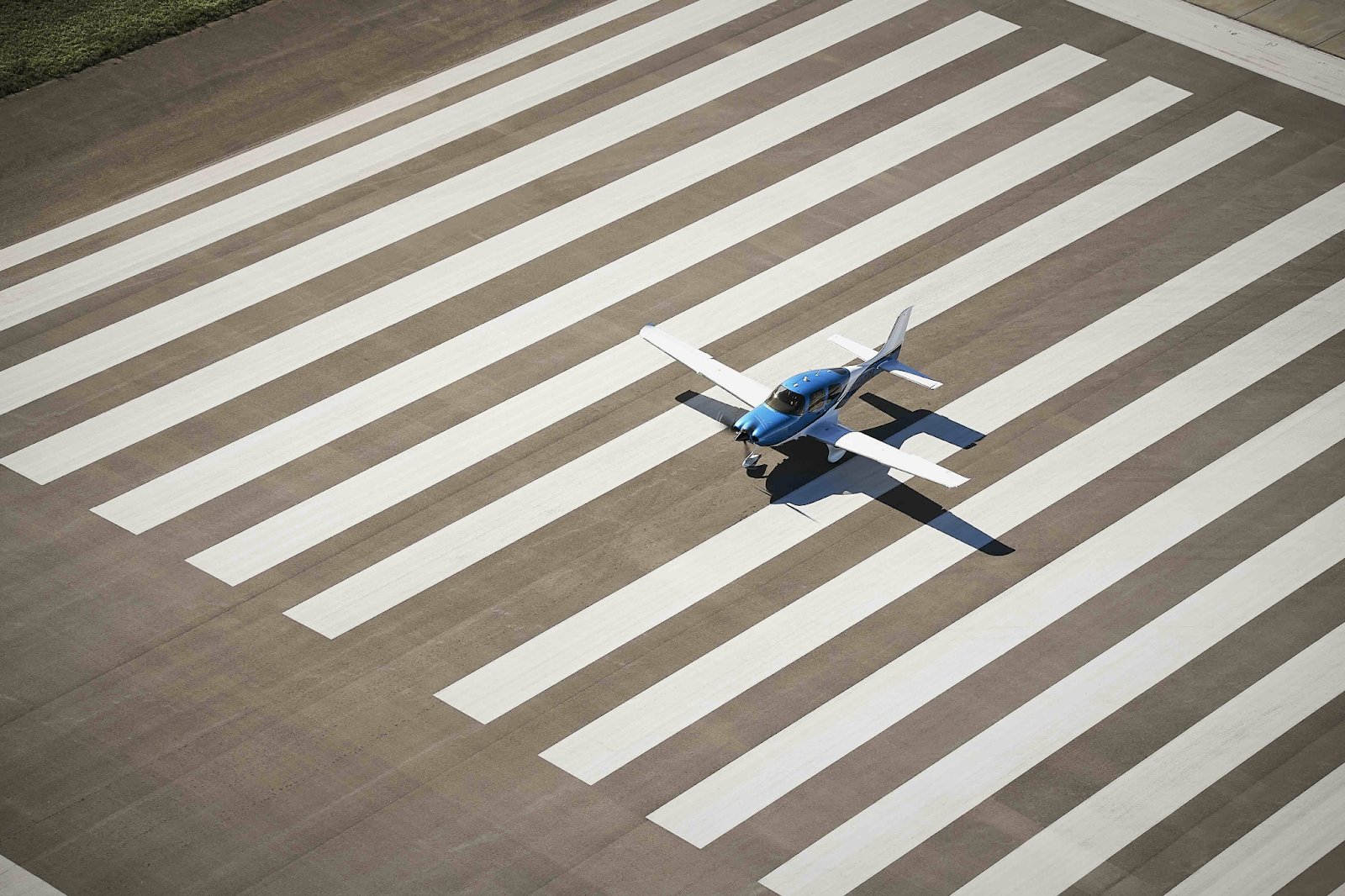
For the pilot accustomed to traditional training platforms (Cessna, Piper, Diamond, etc) stepping into a brand-new Cirrus SR G7+ is not just an upgrade—it’s a major leap forward in performance, technology, and capability.
At P6 Aviation, this is a transition we facilitate every single day.
Cirrus Transition Training In NJ & The NYC Metro Area
As the area’s premier Platinum Cirrus Training Center serving NYC and surrounding areas from our 2 northern New Jersey locations, we provide elite Cirrus transition training to northern NJ and the NYC metro area . This is the training required to move you seamlessly from legacy airframes into the world’s most advanced personal aircraft.
Learning how to fly any advanced aircraft demands a standardized, deliberate approach. The Cirrus SR G7+ is no different. Like top-tier Cirrus Training Centers across the United States, we provide a rigorous, standardized program engineered around safety and mastery.
The Cirrus Transition Training Syllabus: What You'll Actually Cover
We utilize the highly structured, formal syllabus developed by Cirrus Aircraft, meticulously tracked and recorded within the digital Cirrus Approach learning portal.
Every Cirrus transition course covers the following subjects. Here's what the items mean in practice.
Cirrus operational characteristics. How the airframe, wing, and powerplant are different from a trainer, along with the specific airspeeds, power settings, and configurations you'll actually fly. This is where you calibrate your personal flying technique to the way a Cirrus actually performs.
Aircraft systems. Electrical architecture, alternators and batteries, the fuel system, and the practical consequences of systems abnormals or emergencies. Systems knowledge is what separates pilots who react from pilots who anticipate.
VFR maneuvering, takeoffs, and landings. Sight picture, energy management, and speed control. This is where we find most of our transitioning pilots need the most repetition.
Avionics and autopilot management. Programming and configuring the avionics, reading the PFD and MFD quickly, and understanding the autopilot modes well enough that you always know what the aircraft is doing and why.
CAPS scenarios. When the Cirrus Airframe Parachute System is the right answer, the altitude and airspeed considerations, and enough rehearsal time that the decision is already familiar before you ever need it.
Abnormal and emergency procedures. Including avionics malfunctions and partial-panel operations.
Aeronautical Decision Making and risk management. Applied to actual go/no-go decisions, not treated as an acronym on a slide.
The Cirrus Transition training course we provide is executed in two distinct, highly efficient phases, leveraging both in-aircraft training and advanced flight simulation.
1. The VFR Transition Course: Proficiency in the G7 Platform
Designed for licensed pilots looking to fly VFR, this course builds a baseline in airframe systems, limitations, performance, maneuvers and of course, all of the safety systems that Cirrus is known for.
Intro: Begins with 20+ hours of immersive, interactive video modules completed at your own pace through the Cirrus Approach portal.
Flight Time: Typically requires 8-15 hours of flight time alongside our Cirrus Standardized Instructor Pilots (CSIP) and Training Center Instructors (TCI)
Completion: Upon successful completion, Private Pilots have rental access to P6 Aviation’s fleet Cirrus SR20 and/or SR22 G7+ aircraft
2. The IFR Transition Course: Mastery of the G7 Platform
For Instrument Rated pilots, this phase unlocks the true cross-country utility of the Cirrus SR G7, preparing you to fly within our complex NY Class B airspace and beyond with absolute predictability.
Flight Time: Typically requires an additional 8 to 15 hours of flight instruction. The timeline varies naturally based on your current instrument proficiency, currency, and your baseline familiarity with Garmin Avionics
Maximizing Your Time: The Noble G7 Simulator Advantage
Your time is your most valuable commodity. To maximize the efficiency of your training and minimize the friction of learning a new avionics suite, P6 Aviation integrates our advanced Noble G7 Flight Simulator into both transition pathways, wherever feasible.
By practicing buttonology, programming flight profiles, mastering checklist discipline, and exploring the nuances of the Garmin Perspective Touch+ avionics suite in a controlled ground environment, you build profound muscle memory before ever starting the engine. This blended approach ensures that when you do step into the actual aircraft, your focus is entirely on precision execution.
Train in the Exact Cirrus You’re Actually Preparing to Fly
P6 operates 16 Cirrus SR-series aircraft. 8 SR20s and 8 SR22/SR22Ts, including G7 and G7+ aircraft from 2024 through 2026. That gives transitioning pilots the opportunity to learn in current-generation aircraft, and with current-generation avionics instead of having to make another transition after their training is complete.
Already own the airplane? We can also conduct transition training in your own Cirrus when appropriate, so the aircraft, avionics and equipment you learn are the ones you will actually fly.
More Than Initial Transition Training
Not every pilot is moving directly from a trainer into their first Cirrus. P6 also offers SR20-to-SR22 upgrade training, G6-to-G7 differences training, avionics differences training, recurrent/refresher training and Cirrus Embark to qualifying pre-owned aircraft owners.
The training is built around the airplane you know, the airplane you are moving into and the missions you intend to fly.
A Cirrus-Focused Instructor Team
P6’s 14-instructor flight-training team includes Platinum CSIP, CSIP, TCI, Gold Seal, CFII and MEI credentials, with senior instructors bringing thousands of hours of experience across Cirrus, instrument, multi-engine, turbine and airline operations.
That depth shines when the transition moves beyond basic aircraft control and into avionics management, automation, systems knowledge and the judgment required to stay ahead of a more capable airplane.
What Cirrus Transition Training Costs
The total cirrus transition training cost depends on which aircraft you train in, the instructor level, simulator time and how many hours you need to reach proficiency.
Our current rates are $395/hour for the SR20 G7, $495/hour for the SR22/SR22T G7, $150/hour for TCI instruction, $185/hour for Platinum CSIP instruction and $175/hour for the Noble G7 simulator. Instruction in a customer-owned aircraft is currently $165/hour. Aircraft consumables are charged separately and vary by location and market price.
The hourly rate is only part of the equation. Preparation, simulator work and concentrated scheduling can have a significant impact on how efficiently those hours turn into proficiency.
What Happens After Sign-Off
The transition does not have to end when the course does.
Once you meet P6’s applicable checkout, currency, rating and insurance requirements, qualified pilots can continue flying within P6’s Cirrus rental fleet. Renters complete recurrent Cirrus training every six months, and pilots who want to expand their capability can continue directly into instrument or IPC-related training.
The goal is not simply to get you through a checkout. It is to give you a path to keep flying the airplane, building experience and continuing to become more capable in it.
Ready to Make the Transition?
At P6 Aviation, Cirrus transition training is designed to give you that foundation in a structured, deliberate way, whether you are moving out of a traditional trainer, upgrading within the Cirrus family, preparing for IFR flying, or getting ready to operate your own aircraft.
Speak with our team today about your cirrus transition training plan, scheduling options, aircraft availability, and next steps.


