

Cirrus Flight Training FAQ
Training Structure & Curriculum
How is Cirrus flight training different from traditional flight training?
P6 aviation is a Part 61 flight school offering flexible training for pilots. As a Platinum Cirrus Training Center (CTC), we use the Cirrus Approach® training platform —an industry-leading curriculum built around safety and efficiency. All training is conducted in our modern high-performance, technically advanced Cirrus aircraft, meaning you’ll spend less time flying to the practice area and more time actually training. With Cirrus Standardized Instructor Pilots (CSIPs) and Training Center Instructors (TCIs), you’re guided by some of the most qualified instructors in the industry.
What is included in the Cirrus flight training curriculum?
Our curriculum follows the Cirrus Approach® platform, providing ground training through on-demand videos you can complete at your own pace.
New students begin with the Private Pilot Course to become a VFR-qualified Private Pilot.
Experienced pilots can choose from a variety of Cirrus Transition Courses based on their learning needs.
Private and Commercial Pilots looking to continue their training to fly IFR can continue with the Instrument Rating Program
Cirrus flight training includes videos and reading, as well as knowledge and flight assessments.
How long does it typically take for a student to earn a Private Pilot License (PPL) through Cirrus training?
Most students earn their PPL within 3 to 6 months depending on their training frequency. The FAA national average is 70 hours of flight time, while Cirrus students average 75–80 hours due to the higher performance and advanced technology of Cirrus aircraft. Training at P6 also gives you valuable experience navigating New York’s complex airspace—preparing you to fly anywhere in the world.
Is simulator training available, and can simulator hours count toward my license?
Yes. P6 utilizes an advanced simulator (AATD) offering:
An authentic cockpit design with fully functioning avionics and flight controls
Immersive wraparound visuals
Training in a variety of airspaces and weather conditions
Time training on a simulator can be logged toward your license.: up to 2.5 hours for PPL, 20 hours for instrument rating, and 50 hours for commercial training.
What does the lesson schedule look like?
Our training is completely flexible. You can train part-time, full-time, or through an accelerated schedule. Flight, simulator, and ground sessions are all available on demand.
Instructors & Certification
What are Cirrus Standardized Instructor Pilots (CSIPs), and why do they matter?
CSIPS and TCIs are Cirrus-authorized instructors trained to meet global Cirrus standards. Standardization is rigorous to ensure safe and effective training.
Are all instructors certified by Cirrus? What instructor qualifications can I expect?
Yes. All P6 instructors are Cirrus-authorized (CSIPs or TCIs) with extensive experience in Cirrus aircraft, ensuring you learn from highly qualified professionals.
Is this school a certified Cirrus Training Center, and what does that mean for me?
P6 is a Platinum Cirrus Training Center (CTC) —the highest recognition Cirrus offers. This means:
P6 provides authentic Cirrus training and official completion certificates
Enforced proficiency for both safety and insurance benefits
Pilots have access to a modern, well-maintained Cirrus fleet
Aircraft & Safety Features
Which Cirrus aircraft models are used for training?
What are Cirrus aircraft’s key safety features?
Cirrus aircraft are equipped with the following safety features:
Garmin Autoland * G7+ models only
Flight Into Known Icing (FIKI)/TKS systems *SR22 and SR22T only
Angle of Attack (AOA) indicator *SR22 and SR22T only
Why should I choose to train in a Cirrus over a Cessna 172, Piper Archer, or Diamond DA40?
Compared to other aircraft, Cirrus provides unmatched safety and performance:
Faster speeds and more advanced avionics for mission-style flying
Technically Advanced Aircraft (TAA) experience—excellent preparation for larger aircraft, including the Cirrus Vision Jet
Integrated airbags and built-in safety harnesses for enhanced pilot protection
Bluetooth-enabled Garmin avionics (e.g. Garmin Flight Stream 210 or Garmin GMA 345 Audio Panel)
Air conditioning for superior comfort during training in any climate
Is a high performance endorsement required for rental or training on certain Cirrus models?
Yes. All Cirrus aircraft are considered high-performance. You’ll receive the endorsement during your training—whether you’re working on a PPL in an SR20 or transitioning into the SR22/SR22T.
Cost & Financials
What is the estimated total cost of Cirrus flight training, including aircraft rental and instructor fees?
Training costs vary based on frequency and efficiency. On average, earning a PPL requires 75–80 hours in Cirrus aircraft. Our Pricing Page provides detailed cost information. Simulator training can also reduce costs by allowing you to practice systems and procedures on the ground.
Training costs depend on your schedule, experience, and learning pace. Most new pilots budget around $55,000–$60,000 to earn their Private Pilot License (PPL) in a Cirrus aircraft, which typically takes 75–80 flight hours. This investment includes aircraft rental, instructor time, and certification fees. All of these can be reduced with simulator training that lets you practice procedures on the ground.
Are there financing options or payment plans available?
Yes. Students can place money on account with P6 and earn a bonus credit toward future training.
Does training in Cirrus help lower insurance premiums later as a pilot or aircraft owner?
Yes. Cirrus training often provides insurance benefits due to the proficiency standards and safety systems built into the aircraft.
Prerequisites & Requirements
What are the age and eligibility requirements to start training?
Begin flight training at any age (subject to practical limitations).
Apply for a Student Pilot Certificate at age 14.
Solo flight permitted at age 16.
Eligible for a Private Pilot checkride at age 17.
What kind of medical certificate do I need for Cirrus flight training?
No medical certificate required to begin training.
FAA 3rd Class Medical required to complete your PPL.
BasicMed is accepted for experienced pilots transitioning into Cirrus.
Are there any citizenship or language requirements for enrollment?
Yes. Training requires proficiency in English per FAA standards. For international students, P6 assists with the Flight Training Security Program (FTSP) requirements to ensure training can begin smoothly.
Can previous flight time or ratings be credited or transferred to the Cirrus program?
Absolutely. All prior logged flight time and certificates apply. Experienced Cirrus pilots may complete a checkout flight with P6 to qualify as renters, so long as they have a completion certificate of a qualified Cirrus Transition course.
Discovery Flight & Getting Started
What happens during a Discovery Flight and how do I schedule one?
A Discovery Flight introduces you to flying a Cirrus aircraft. This two-hour experience includes:
30 minutes of ground instruction with your instructor
Aircraft preflight inspection
1 hour of flight where you taxi, take off, and fly under close supervision
Flights depart from Essex County Airport (KCDW), or Morristown Airport (KMMU). Schedule your Discovery Flight here.
How much does a Discovery Flight cost, and does that time count toward my Private Pilot License?
The Discovery Flight is $575 plus tax. All logged flight time counts toward your PPL if you continue training.
What’s the process for enrolling and what are the first steps?
Interested in Private Pilot training? Book a Discovery Flight.
Interested in Cirrus Transition or advanced training? Contact us directly.
Advanced Ratings & Training
Do you offer instrument, commercial, or instructor ratings in Cirrus aircraft?
Yes. P6 provides training for Instrument, Commercial, and Certified Flight Instructor (CFI) certificates in Cirrus aircraft. We also offer Multi-Engine and Multi-Engine Instructor training in the Diamond DA-42-VI.
Is there a transition course for experienced pilots wanting to fly Cirrus?
Yes. Transition training is available for SR20, SR22, and SR22T aircraft, including advanced training for higher altitudes (up to FL250) with oxygen and anti-ice systems.
Does your school provide recurrent or refresher training?
Yes. All Cirrus renters complete recurrent training every 6 months to ensure proficiency. Refresher courses are also available.
Is complimentary transition training available for buyers of pre-owned Cirrus aircraft?
Yes. Through the Cirrus Embark program, P6 provides three full days of complimentary training for pre-owned Cirrus buyers (funded by Cirrus Aircraft).
Can I continue Cirrus training if I move or travel, or are there network options?
Yes. All progress is logged in Cirrus Approach, which is accessible nationwide at other Cirrus Training Centers. Certificates earned at P6 make it easier to rent Cirrus aircraft across the country.
Practical Training Considerations
What weather minimums and operating conditions do you follow for training?
Private Pilot training begins in calm conditions (winds <10 knots, clear skies, visibility >10 miles).
As you advance, you’ll train in progressively more challenging weather.
Instrument training may include real IMC conditions when safe and practical.
Ground and simulator training can substitute on poor weather days.
Are there special checkout or insurance requirements for solo flight in Cirrus aircraft?
Yes. Before soloing, all students complete a checkout flight with a P6 instructor, demonstrating normal and emergency procedures. Non-owned renter’s insurance is required for solo flight.
What student support resources are available?
Students benefit from:
Access to the P6 instructor team for mentorship
Online training materials and aviation resources
Cirrus Approach video training
Simulator access for scenario-based learning
Virtual ground training sessions through Zoom with P6 Aviation’s instructor team for flexible, interactive learning
Key Considerations For New Cirrus Pilots
Is training in a Cirrus worth the extra cost compared to traditional trainers?
Yes, especially if your goal is to become a pilot for personal use and to eventually fly with your family and friends. Cirrus aircraft are faster, more advanced, and provide more standard safety features than most traditional trainers. If your goal is high-performance personal travel or advanced training, Cirrus provides a superior environment in a Technically Advanced Aircraft (TAA).
What are the main challenges new students face when learning in a Cirrus versus a Cessna, Piper or Diamond?
Cirrus aircraft fly faster, and their advanced avionics can initially seem sophisticated. However, with structured training and simulator practice, students quickly adapt.
Will starting my PPL in a Cirrus make it harder to later fly traditional trainers, or vice versa?
Quite the opposite, while switching aircraft always requires an adjustment period, learning in a Cirrus provides strong avionics and situational awareness skills that carry over to other aircraft.
How do Cirrus pilots and students address the learning curve of advanced avionics and automation?
Our simulator provides a low-stress environment to practice Garmin avionics and automation systems. This helps students become confident with the aircraft’s advanced features before flying.
Is Cirrus training "harder" or "easier" for nervous or older beginner pilots?
Cirrus training is often easier for nervous or older beginners thanks to advanced avionics and safety systems like CAPS® and Garmin Autoland, which provide reassurance and peace of mind.
What is P6’s methodology for flight training?
We believe in immersion. Flying is a mental, physical and psychological endeavor, which requires time and patience. It’s an endurance game. There is a real benefit to going all-in, as opposed to stretching your training out. Our pedagogy shapes knowledgable, well-rounded pilots who operate like professionals.
How long does it take to become a pilot, in terms of actual length and logbook hours?
Even given the challenging NE weather, a student pilot should be able to achieve their private pilot certificate in approximately 3 months — the caveat being that you fly multiple (3-4) times per week and study several hours per day. There is no lite version to flight training that achieves results quickly.
With regards to the second question regarding logbook hours, the FAA requires 40 hours for a private pilot under Part 61 rules. To learn in the NE, you can expect approximately 65 hours. To learn in a Cirrus SR20 G6, you can expect 80 hours. That is because you are learning the basic mechanics of flying and airmanship, in addition to the Garmin Perspective+ system, which takes some time — all while learning to navigate very complex airspace.
Why do you fly exclusively Cirrus Aircraft?
We are professional pilots who believe in pilot safety first and foremost. Given this core tenet, it would be irresponsible and hypocritical not to fly the very best equipment available. The Cirrus SR Series (w/ Garmin Perspective+ avionics) is a highly advanced general aviation piston aircraft and in some ways, more advanced than the jets that we flew in the Part 121 world.
Our clients don’t see cost and safety as a tradeoff. They understand that the best equipment comes with a premium and the cost-benefit analysis falls clearly on the side of safety.
Do you feel that this is a safe aircraft for flying your family around?
I’ll answer that question with these photos!
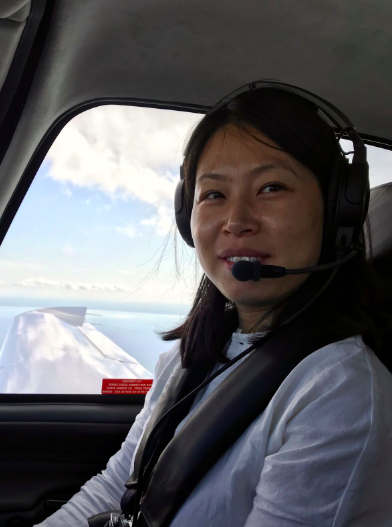
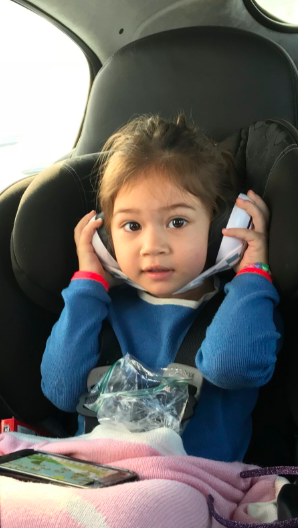
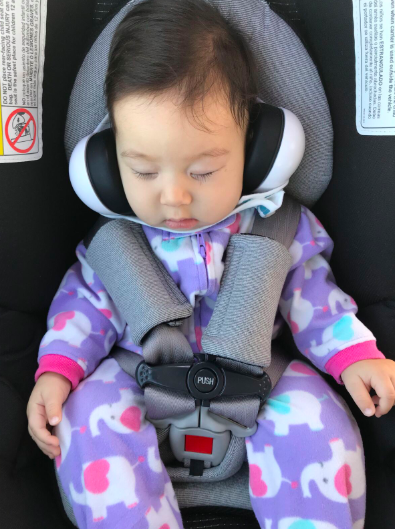
I’ll take it one step further. Cirrus aircraft are equipped with:
65’ airframe parachute
LVL button on the Autopilot, which essentially corrects any adverse aircraft attitude before a pilot gets into a loss-of-control situation
Pilot and Front passenger airbags
So, yes, I would and do fly my family in this aircraft
Does P6 manage aircraft and what do those services entail?
Aircraft management can be summed up by saying that our clients want to arrive at their airplane, do a thorough preflight and go. They don’t want to have to update navigation databases, clean the cargo area and make sure tire pressure is within parameters. That’s what we do and we’re extremely attentive to it.


