
How to Earn Your Multi-Engine Rating at P6 Aviation
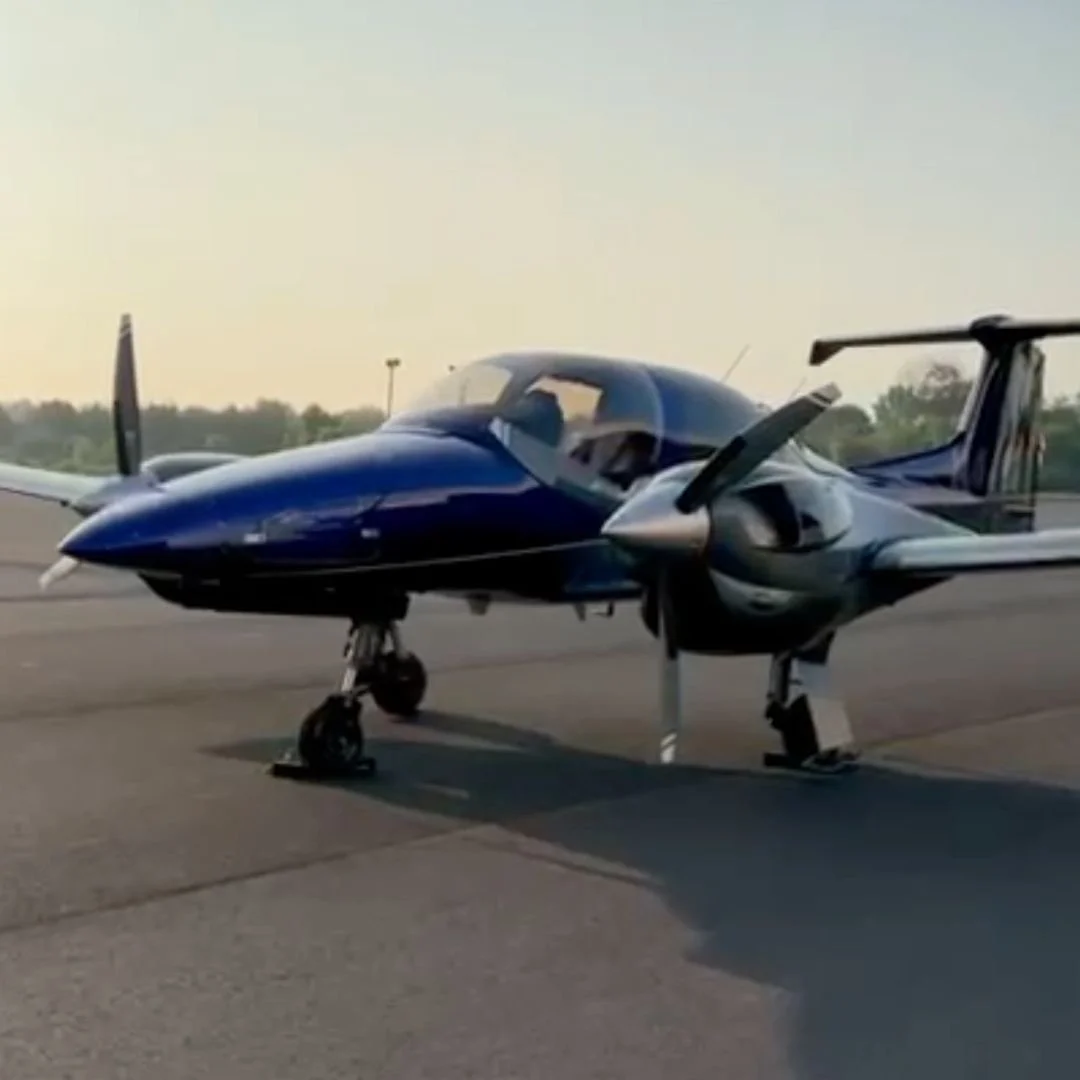
While earning your Private Pilot certificate is a remarkable achievement, obtaining your Multi-Engine Rating is another feather that you could add to your piloting cap that's a ton of fun and highly beneficial. At P6Aviation, we offer a Multi-Engine rating course that will help you develop advanced flying, decision-making, and systems management skills. This will absolutely make you a more well-rounded and proficient pilot! With our top-notch training team, warm weather on the horizon, and our beautiful Diamond Aircraft 2023 DA42, there's no better time to get started!
What Is a Multi-Engine Rating?
A Multi-Engine Rating is an add-on to your existing pilot certificate that authorizes you to operate aircraft with more than one engine. This rating will introduce you to more complex systems and performance characteristics, helping prepare you for advanced flying scenarios and enhancing your overall proficiency as a pilot.
Under FAA regulations, most pilots earn this rating as an “add-on” to an existing certificate under 14 CFR §61.63(c). Instead of completing a new written knowledge test or meeting additional minimum hour requirements, pilots must receive training and an endorsement from an authorized instructor and then pass a practical test with an FAA examiner. Because the rating is proficiency-based, the exact amount of training required depends on the pilot’s skill level and experience.
For most general aviation pilots, the value of a multi-engine rating isn’t only about unlocking access to new aircraft. Multiengine flying is heavily focused on managing situations where one engine is no longer producing power, so pilots gain a new skill set that should help them become better pilots overall.
TRANSITIONING TO MULTI-ENGINE AIRCRAFT
One of the biggest differences students experience when transitioning to multiengine aircraft is managing asymmetric thrust. When one engine fails, the remaining engine continues producing thrust from one side of the airplane, creating a strong yaw and roll toward the failed engine. Pilots must counter this using rudder, proper bank angle, and drag reduction procedures while maintaining safe airspeeds.
Our students also learn about important multiengine performance speeds such as VMC (minimum controllable airspeed) and VYSE (best single-engine rate-of-climb speed). VMC represents the speed below which the airplane may no longer be controllable after an engine failure, while VYSE represents the speed that provides the best climb performance when operating on one engine.
A major theme of multiengine training is that losing one engine does not simply reduce power by half. In many light twins, the loss of one engine can reduce climb performance by as much as 80–90 percent due to additional drag, control forces, and asymmetric thrust. This is why multiengine training focuses heavily on proper aircraft configuration and drag reduction during engine-out situations.
Why Pursue a Multi-Engine Rating?
For many private pilots, the benefit of multiengine flying comes from the combination of performance and flexibility. Twins often provide faster cruise speeds and higher payload capability than many common training singles, which can make them attractive for longer cross-country trips or flights where pilots are traveling with multiple passengers.
At the same time, multiengine aircraft can introduce additional complexity and operating costs. Two engines mean more systems for a pilot to manage, higher fuel consumption, and greater emphasis on training and proficiency. The FAA and aviation safety organizations consistently stress that the advantages of a second engine translate into safety benefits only when the pilot is properly trained and remains proficient.
Overall, the most prominent benefits of obtaining a Multi-Engine Rating for pilots are:
Obtaining a Multi-Engine Rating offers several advantages for pilots:
Enhanced Performance: Multi-engine aircraft typically offer higher speeds, greater range, and improved climb rates.
Increased Safety: A second engine provides an added layer of safety, especially during a long-distance or overwater flight.
Career Advancement: Many commercial & airline pilot positions require experience with multi-engine aircraft.
Skill Development: You'll gain advanced knowledge in systems management, decision-making, and emergency aircraft procedures.
Prerequisites for a Multi-Engine Rating
Before enrolling in our Multi-Engine Rating course, we’ll ensure you meet the following requirements:
Valid Pilot Certificate: Hold at least a Private Pilot Certificate.
Medical Certification: Possess a current FAA medical certificate.
English Proficiency: Ability to read, speak, write, and understand English.
Flight Experience: While there’s no specific hour requirement, you'll need sufficient proficiency in single-engine operations to begin training.
Potential Extended Prerequisites:
Because many multi-engine aircraft include retractable landing gear, controllable pitch propellers, or more powerful engines, pilots may also need additional endorsements such as complex or high-performance endorsements under FAA regulations before acting as pilot in command.
Is an Instrument Rating Required?
An instrument rating isn’t mandatory to obtain a Multi-Engine Rating. However, if you plan to operate multi-engine aircraft under Instrument Flight Rules (IFR), then an instrument rating is necessary. Additionally, for commercial pilots, demonstrating instrument proficiency in a multi-engine aircraft may be required during the checkride.
Step-by-Step: Earning Your Multi-Engine Rating
1. Earn a Private Pilot Certificate
Before pursuing a Multi-Engine Rating, pilots must have their Private Pilot Certificate. This foundational license ensures a pilot has the basic skills and knowledge required for advanced training.
2. Meet Eligibility & Medical Requirements
Make sure your FAA medical certificate is up to date and that you meet all other requirements like English proficiency and general flight readiness.
3. Begin Ground and Flight Training
Enroll in our Multi-Engine Rating course at P6 Aviation. Ground school at P6 covers multi-engine aerodynamics, engine-out procedures, and aircraft systems. Flight training focuses on aircraft control, emergency scenarios, and precision maneuvering in our Diamond DA42.
4. Prepare for the Checkride
Once you receive a flight instructor endorsement, you'll complete a practical test with a DPE (Designated Pilot Examiner), including an oral exam and a flight test to assess your multi-engine skills.
5. Add the Rating to Your Certificate
Upon passing your checkride, your new Multi-Engine Rating will be added to your pilot certificate—officially clearing you to fly multi-engine aircraft.
What to Expect During Training
Ground Training Includes:
Multi-engine aerodynamics and principles
Systems operation and engine management
Weight and balance considerations
Performance calculations and limitations
Emergency procedures (especially engine-out operations)
Flight Training Covers:
Takeoff and landing techniques in multi-engine aircraft
Single-engine procedures and Vmc demonstrations
Instrument approaches (if applicable)
Advanced navigation and system monitoring
At P6 Aviation, you’ll fly our 2023 Diamond DA42-VI Twin Star, complete with G1000 NXi avionics—an advanced, safety-focused, fuel-efficient aircraft that’s perfect for MEL training.
Investment in Your Training
Understanding the costs involved is important. Here's a breakdown of what to expect at P6 Aviation:
Aircraft Rental (DA42): $685/hour
Instructor Fees: $140/hour
Consumables: Approx. $91/hour (varies with fuel prices)
Training is typically completed in 8–15 hours depending on your proficiency.
IS A MULTI-ENGINE RATING WORTH IT?
For many private pilots, the decision to pursue a multi-engine rating depends on mission and flying goals. Pilots who regularly fly longer cross-country trips, travel with multiple passengers, or operate over terrain or water where landing options may be limited often find that the additional capability of a twin provides valuable flexibility.
A second engine can provide additional options following an engine problem, but it does not automatically guarantee better performance. In some aircraft and conditions, a twin may struggle to climb on one engine depending on weight, density altitude, and configuration. For this reason, the real safety advantage of a twin comes from a pilot’s understanding of engine-out performance and maintaining proper airspeed and aircraft control.
Even pilots who rarely fly twins after earning the rating often find that multiengine training improves their overall decision-making and aircraft management skills. Training emphasizes disciplined procedures, system awareness, and emergency management. There are skills that benefit any pilot.
WHEN SHOULD YOU GET YOUR MULTI-ENGINE RATING?
There is no single “correct” time for a pilot to earn a multi-engine rating, but many pilots pursue it after completing their instrument rating. At this stage of training, pilots are already comfortable managing cockpit workload, navigation systems, and decision-making under more complex conditions. This experience makes the transition to multiengine procedures and engine-out training easier to absorb.
Some pilots choose to pursue their multi-engine rating earlier if they plan to purchase, share, or regularly fly a twin aircraft. In these cases, the rating becomes part of a specific aircraft ownership or travel mission rather than simply a training milestone.
Ultimately, the best time to earn a multi-engine rating is when you have a clear reason to use it and a plan to stay proficient. Like any advanced flying skill, multiengine proficiency improves with regular practice and experience.
Frequently Asked Questions
Q: Can I log complex time in a multi-engine aircraft?
A: Yes, as long as the aircraft meets the FAA's definition (retractable gear, flaps, and controllable-pitch propeller). The Diamond DA42 is a complex aircraft, and will enable you to simultaneously earn your complex endorsement if you haven’t already.
Q: Is the Multi-Engine Rating difficult to obtain?
A: It's a step up in complexity, but with both consistent training & high level instructors, pilots that train with P6 find it very achievable.
Q: How long does it take to complete your multi engine rating?
A: Many of our students finish in as little as 1–2 weeks depending on weather, their schedule, and prior experience.
Ready to Take the Next Step?
Embarking on your Multi-Engine Rating journey is an impactful commitment to you as a pilot—and we’re here to support you every step of the way.
📞 Call or Text: (973) 575-0520
📧 Email: info@p6aviation.com
📍 Visit Us: Essex County Airport (CDW), Fairfield, NJ
Or just stop by and hang out in the lounge—we love talking shop with current and future pilots.


